A Morning Table
Breakfast is not a service here so much as a habit the house has. It begins in the garden, usually before six, and nobody is asked what they would like.
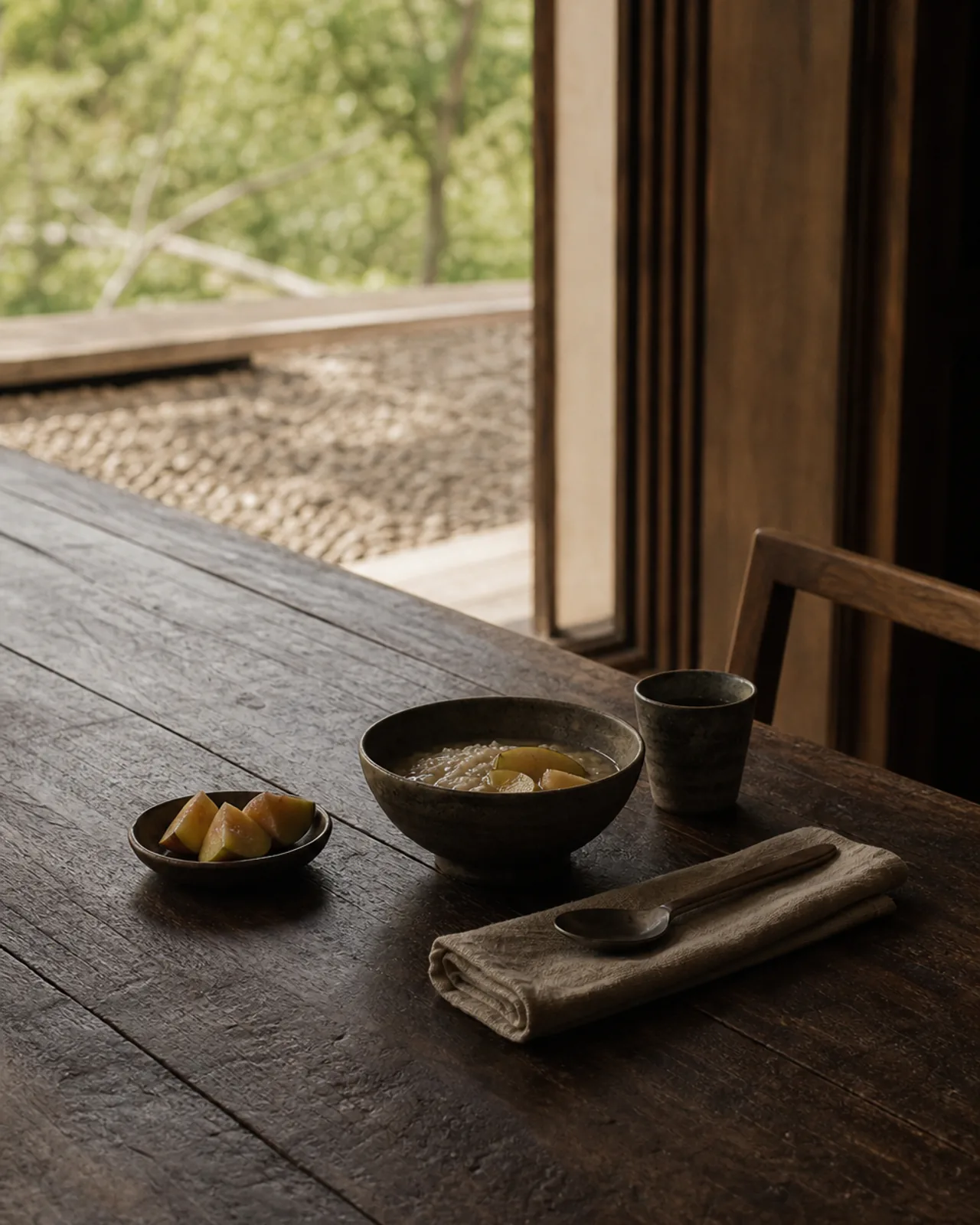
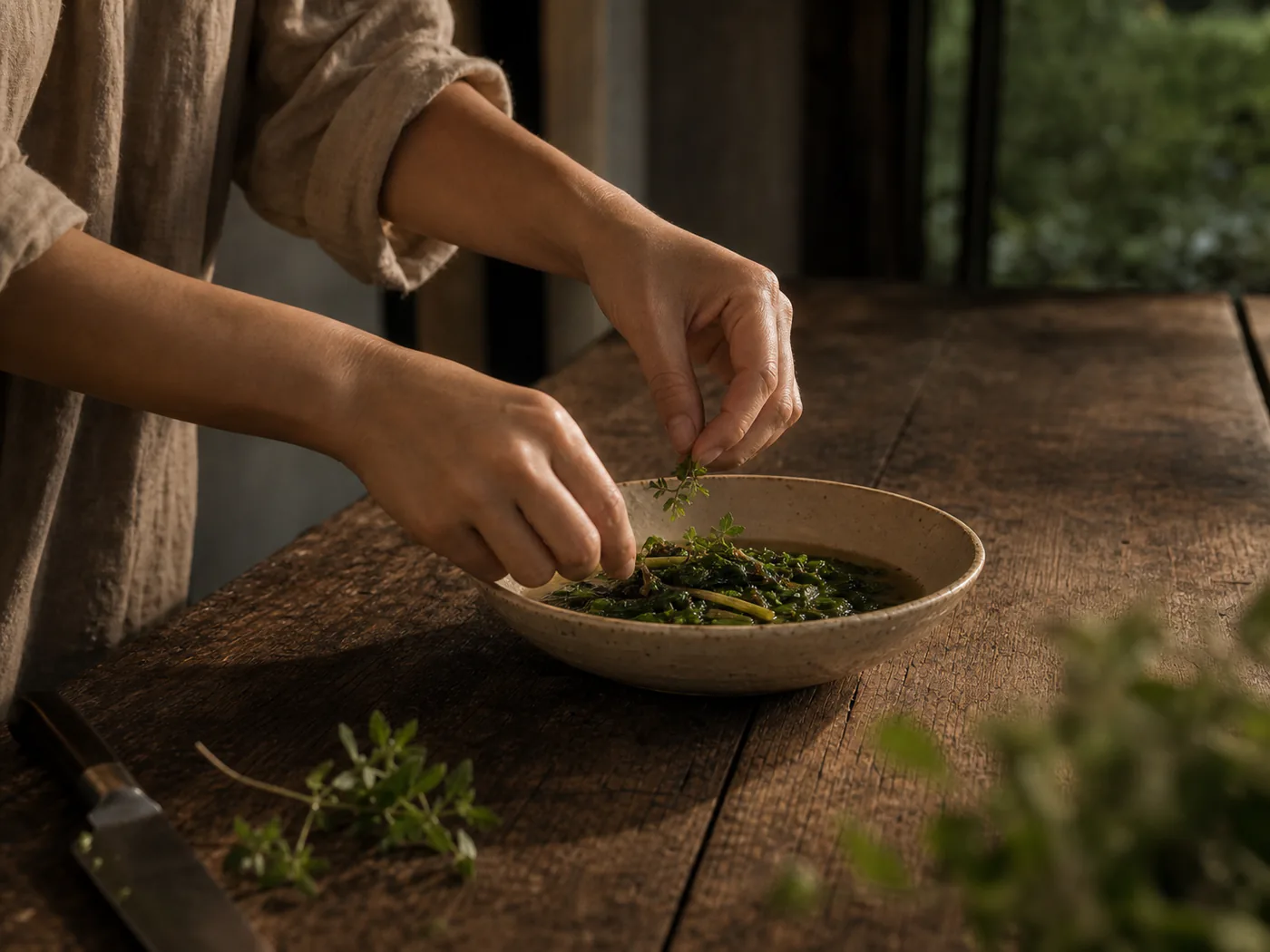
Breakfast is not a service here so much as a habit the house has. It begins in the garden, usually before six, with whatever is ready — herbs, a few greens, occasionally fruit from the two trees that were on the slope long before the house was.
Whoever is cooking walks out with a basket and comes back about twenty minutes later, and that walk determines the meal. There is no order placed the night before and no stock kept beyond a week. If the garden has nothing, the meal is smaller. This happens perhaps six times a year and nobody has ever complained.
A small kitchen decides the menu
The kitchen is small on purpose. A small kitchen decides the menu for you: rice porridge most mornings, preserved vegetables from the previous season, eggs, and a pot of local tea that stays on the table long after the plates are cleared.
There is no printed menu and no choice offered, which sounds austere and is not. Removing the decision from the start of the morning turns out to be the most restful thing the kitchen does. Guests who arrive irritated by this on day one are usually its most vocal defenders by day three.
Dietary requirements are a different matter and are simply accommodated. A day's notice makes it easy; no notice makes it a slightly worse breakfast for one person, which is a fair trade for not running a stockroom.
One plank, everyone
The table itself is one plank — two and a half metres of a single tree that came down in a storm two valleys over — and it seats everyone staying that week. Guests are not obliged to speak to one another and often do not, which is its own kind of hospitality.
The room is oriented east, so the light does most of the talking until about eight. By nine it has moved off the table entirely and the room becomes ordinary, which is the signal most people take to leave.
Guests are not obliged to speak to one another and often do not. That is its own kind of hospitality.
What is usually on it
A typical morning
- Rice porridge, thin rather than thick, with ginger and whatever herb is strongest that week.
- Preserved vegetables from the previous season's surplus.
- Eggs from the village at the bottom of the hill, boiled soft.
- Fruit, only if the trees have given any — some weeks they have not.
- A pot of local tea, refilled without being asked.
The preserving shelf
Along the north wall of the kitchen there are about forty jars, and they are the reason the menu holds together across a year. Late in each season whatever is in surplus goes into them — mustard greens, young bamboo, chillies, small limes — and comes back out three months later when the garden has nothing to offer.
It is the least photogenic part of the operation and probably the most important. A seasonal kitchen without a preserving shelf is only seasonal for about four months of the year; the rest of the time it is just a kitchen that buys things.
What is served changes constantly and the shape of the morning never does. That seems to be the point.