The First Rain
There is a week each year when the air changes before the sky does. Guests who arrive in it often think they have come at the wrong time. They have not.
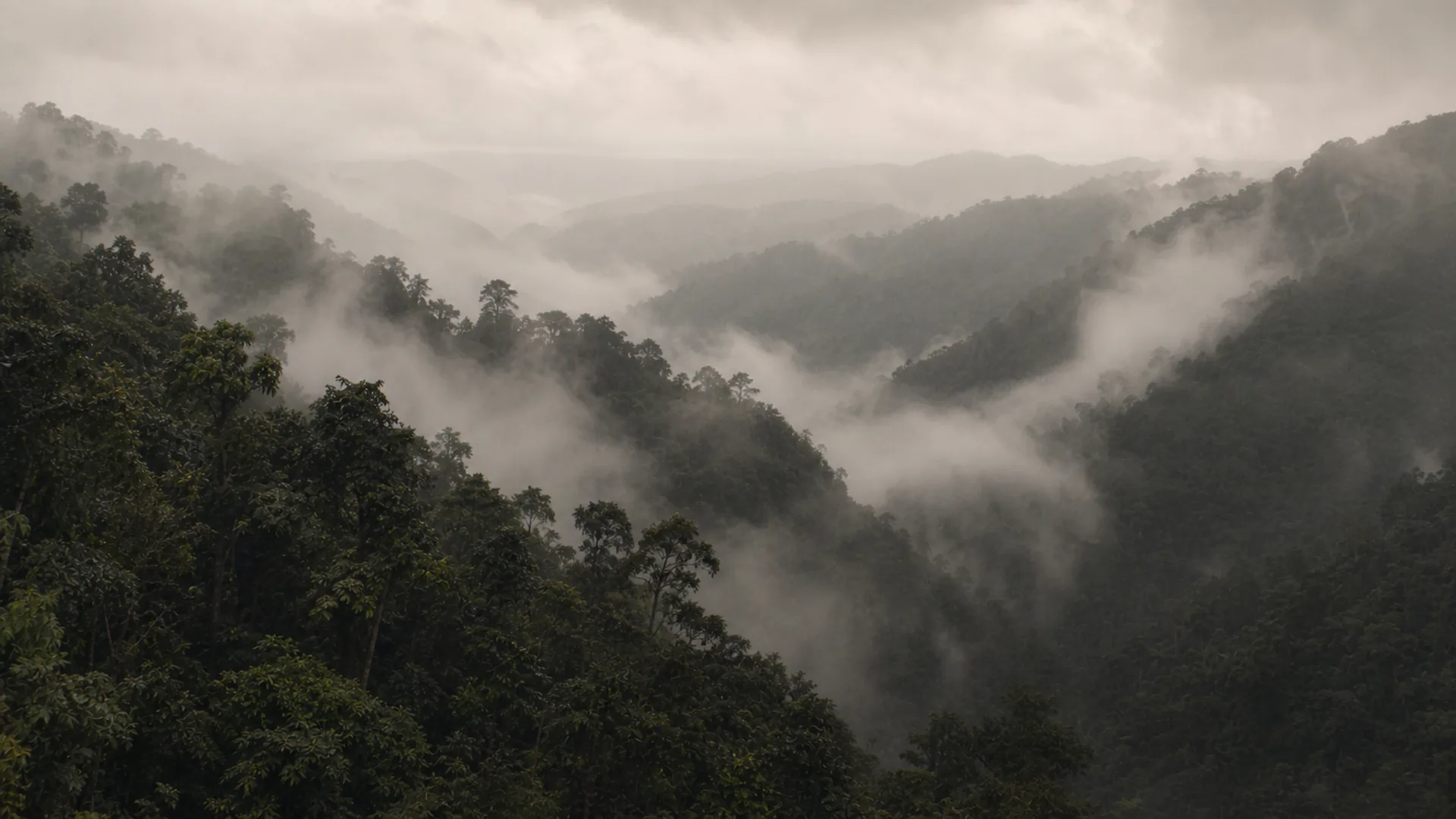
There is a week each year when the air changes before the sky does. It thickens. The forest, which has been dry and pale and full of sound, goes quiet for a day or two, as though holding its breath. The birds that wake the Forest Room at half past five simply do not, and their absence is the first thing anyone notices.
Then the first rain arrives, usually in the late afternoon, and everything at once smells of earth. The path below the house darkens. The stone courtyard, which has been the hottest surface on the property, becomes the coolest within an hour.
The valley becomes legible
Guests who arrive in this week often ask whether they have come at a bad time. They have not. The valley is at its most legible when it is wet — the ridgelines separate into layers, the mist finds the contours, and from the terrace you can read the shape of the land the way you would read a drawing.
In the dry months the far range is a single flat silhouette. After rain it becomes four distinct ridges at four distinct distances, and the two side valleys that are invisible in April open up as pale gaps. It is the same view. It is not remotely the same view.
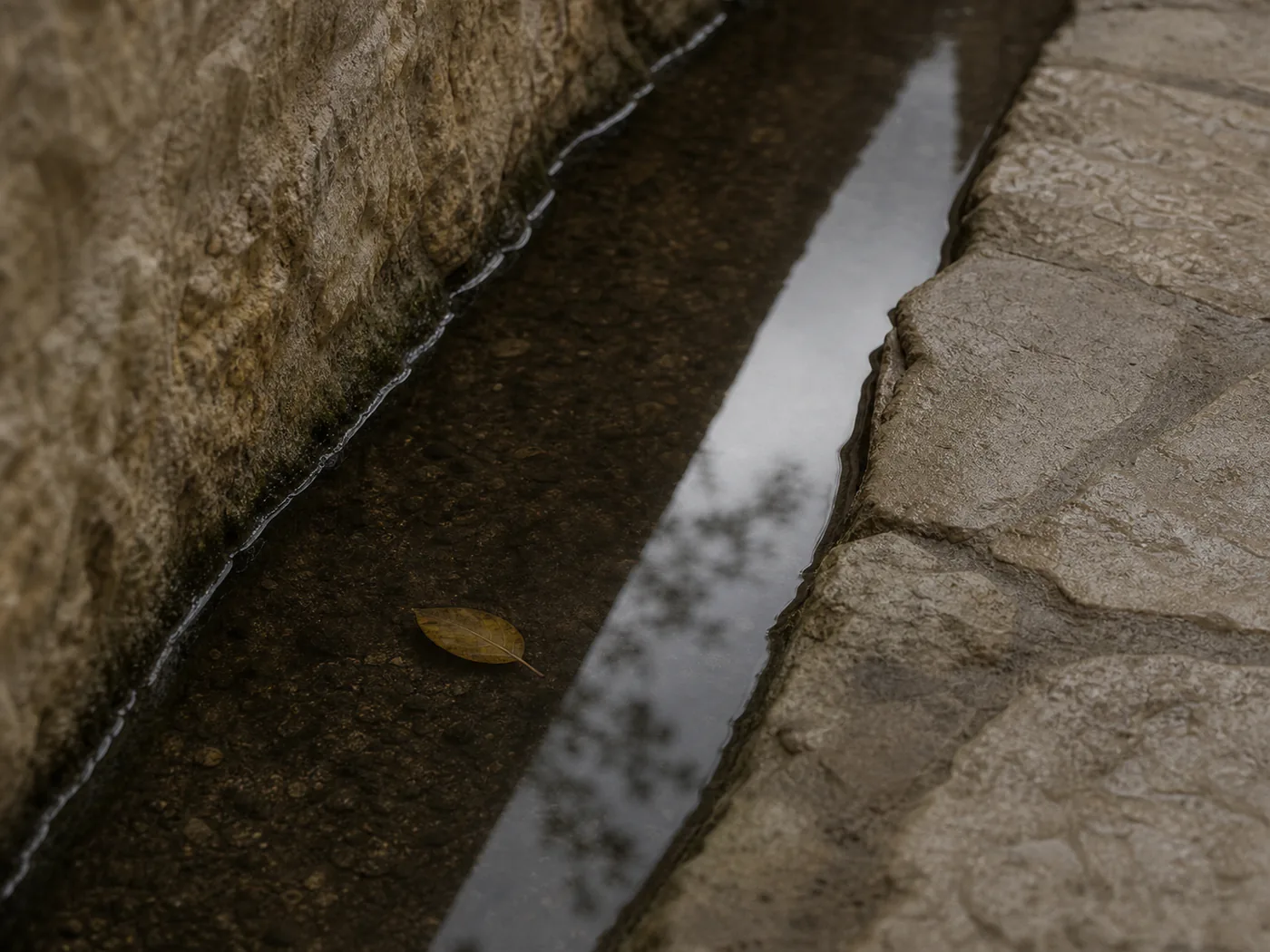
From the terrace you can read the shape of the land the way you would read a drawing.
What the building does about it
The eaves are deep on the south and west sides — deep enough that a window can stay open through most of a storm. That was not an aesthetic decision. It came from a season spent watching where water actually lands, which is rarely where a drawing suggests it will.
The courtyard has no gutters at all. Water comes off the roof in four places and falls onto stone, loudly, and this was argued about for a long time before it was built. It is now the single most commented-on feature of the property, which is a lesson about how often the thing worth keeping is the thing that seemed like a problem.
- Deep eaves on the exposed elevations, shallow ones where the slope already shelters the building.
- No gutters on the courtyard side — the water is allowed to fall and be heard.
- Thresholds raised a hand's width, which is the difference between a wet floor and a dry one.
- Lime plaster inside, so the walls dry out between storms rather than holding damp.
- Every path surfaced in loose stone rather than anything smooth, for reasons that become obvious within one afternoon.
The green changes twice
By the second week the green has changed entirely. It is a heavier, more saturated colour, and it will hold until the cold months. Then in late January it shifts again — drier, greyer, with more of the structure of the trees showing through — and that second change is the one almost nobody is here to see, because it happens over about ten days in the least-booked part of the year.
The house is designed for both ends of this: deep eaves for the rain, and openings wide enough that the dry season still reaches the back of every room.
Coming in the wet season
Bring one more layer than you think you need — the evenings drop further than the daytime temperature suggests, and the Hill Residence is several degrees cooler than the courtyard at any hour. Walking is still good, though the ridge path turns slippery for about two days after heavy rain and is unpleasant rather than dangerous.
- Rain comes mostly in the late afternoon and rarely lasts past seven.
- Mornings are frequently clear, and are the best of the year for the ridge walk.
- Mushrooms appear on the upper path for about three weeks and then are gone.
- The road in is fine; the last four kilometres are simply slower.
Most guests end up reading through the heavy part of the afternoon and going out at five, when the rain has usually stopped and the light comes back low and clean. It is not a compromise. Several people have said it is the best part of the day, and they are probably right.