What the Weavers Know
The textiles in every room come from a workshop of four people who have never described what they do as design.
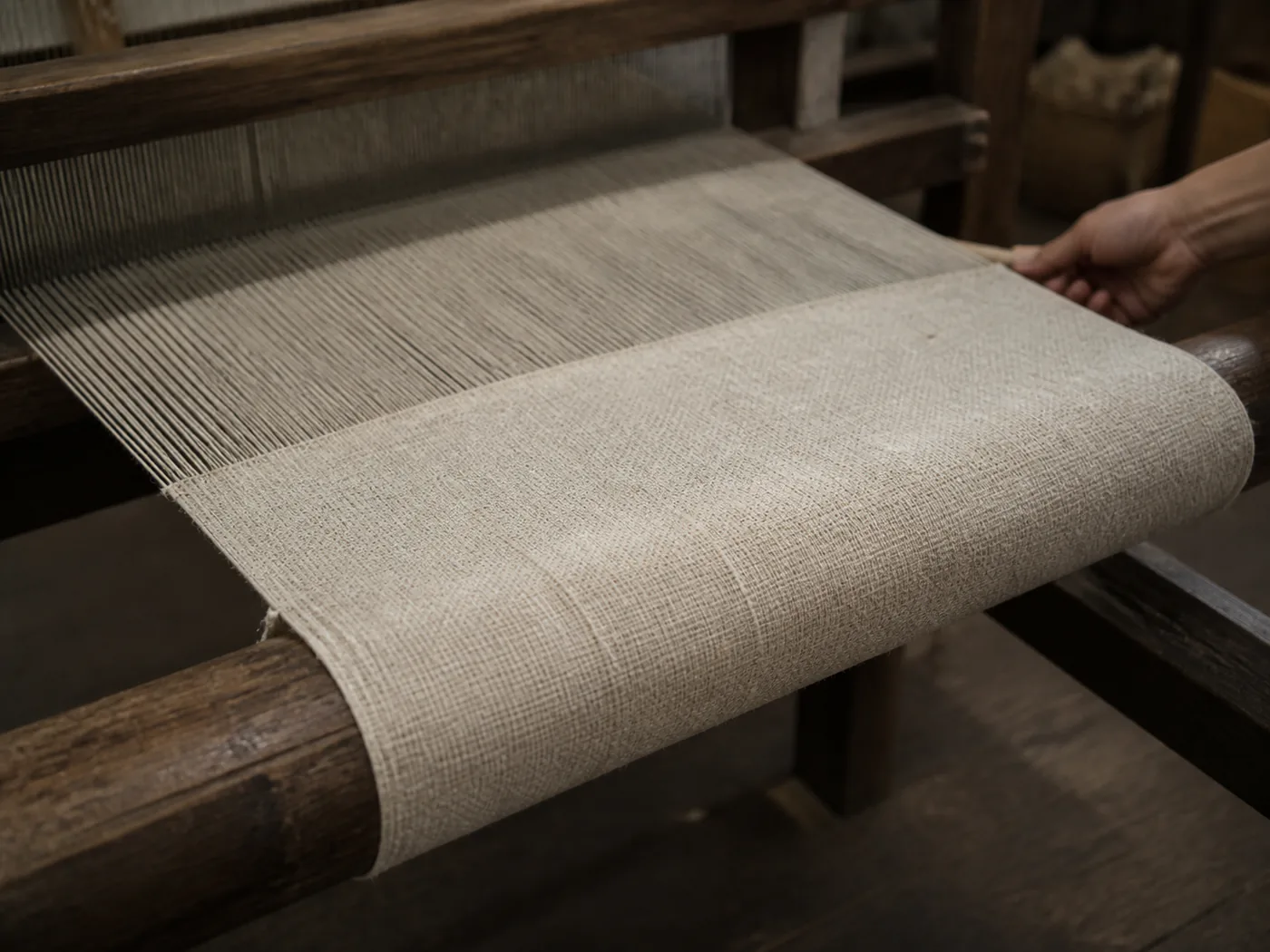
The textiles in every room — curtains, bedding, the cushions on the terrace — come from a workshop of four people two valleys away. None of them has ever described what they do as design. They describe it as work, and they measure it by arm-span rather than by metre.
The first order took four months to place, most of which was spent establishing that we did not want anything unusual. This turned out to be difficult to communicate. Every outside enquiry they had received for years had asked for something special, and the request for the plainest cloth they made was met with genuine suspicion.
Undyed, on purpose
Almost everything is left undyed. This was their suggestion, not ours. Undyed cotton and hemp filter light without colouring it, which matters enormously in rooms where the light is the main event. A dyed curtain throws its colour onto the wall behind it all afternoon; an undyed one does not.
There are two exceptions, both in the Hill Residence, where a very pale indigo was used for the terrace cushions because they sit against sky rather than plaster. Even that took a conversation.
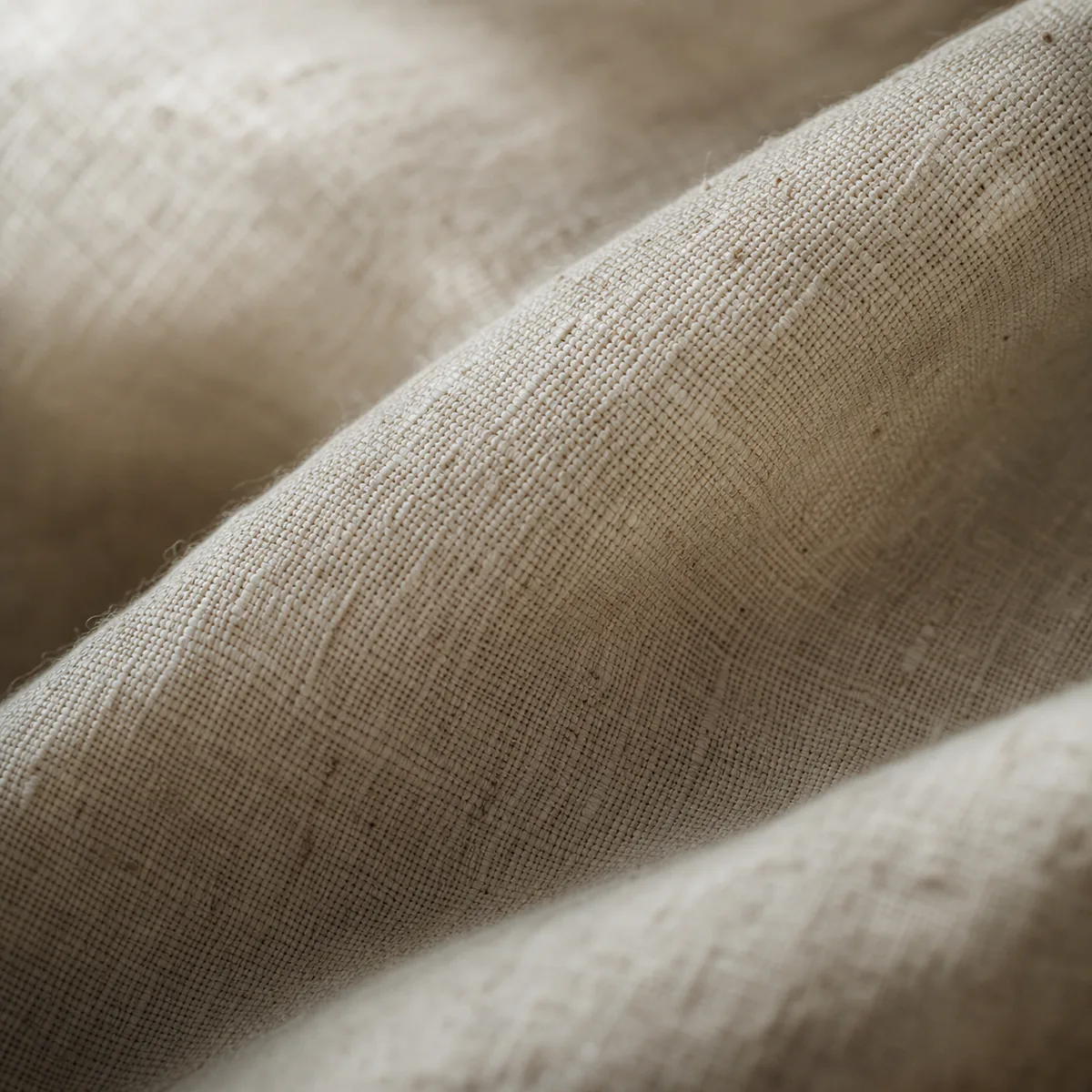
You will see the mistakes for the first week. After that you will only see them if you are looking for them.
The workshop's eldest weaver
Why the edges are uneven
The curtain in the Forest Room is nineteen millimetres wider at the bottom than at the top. It was offered as a replacement and refused. That kind of variance is what separates cloth from material, and once a room has one honest irregularity in it, everything else in the room relaxes.
It also means nothing can be reordered exactly. Replacements are woven fresh and never quite match, so the house drifts slowly out of uniformity as things wear out. That was accepted at the start, and five years in it is beginning to show — the oldest bedding is perceptibly softer and a half-shade warmer than the newest.
What it costs
More than the alternative, and less than people assume. A set of hand-woven bedding runs to roughly four times the price of a good mill equivalent and lasts something like three times as long, so the arithmetic is worse but not absurd.
The part that does not appear in the arithmetic is that the workshop still exists. There were eleven of them in this valley thirty years ago. There are two now, and one of those is four people who could stop at any point.
Visiting
- The workshop takes visitors most afternoons between November and March.
- It is a working room, not a demonstration — expect to be largely ignored, pleasantly.
- Nothing is for sale on site; commissions take between four and nine weeks.
- Getting there is forty minutes by road, most of it slow.
- Photographs are fine. Filming is not, and the reason has never been explained.
Guests who go tend to come back quieter and considerably more interested in their own curtains, which is the entire reason the visit is offered.